🐎 We are not Horses

Counterpoint to Tony Seba’s ‘This Time, we Are the Horses’: The Unintended Consequences of AI Over-Automation

Tony Seba, RethinkX

This Time, We are the Horses? 

Futurist Tony Seba’s, RethinkX compelling argument in This Time, We Are the Horses suggests that AI-driven automation will inevitably and completely replace human-driven business activities, just as automobiles replaced horses in the early 20th century. His thesis envisions a future where human labor is largely obsolete, and AI takes over decision-making, execution, and even strategic roles in business. While this vision is technologically exciting, it overlooks critical risks—specifically, the erosion of company culture, values, and accountability, all of which are foundational to high-performing organizations and society.

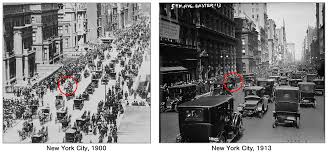
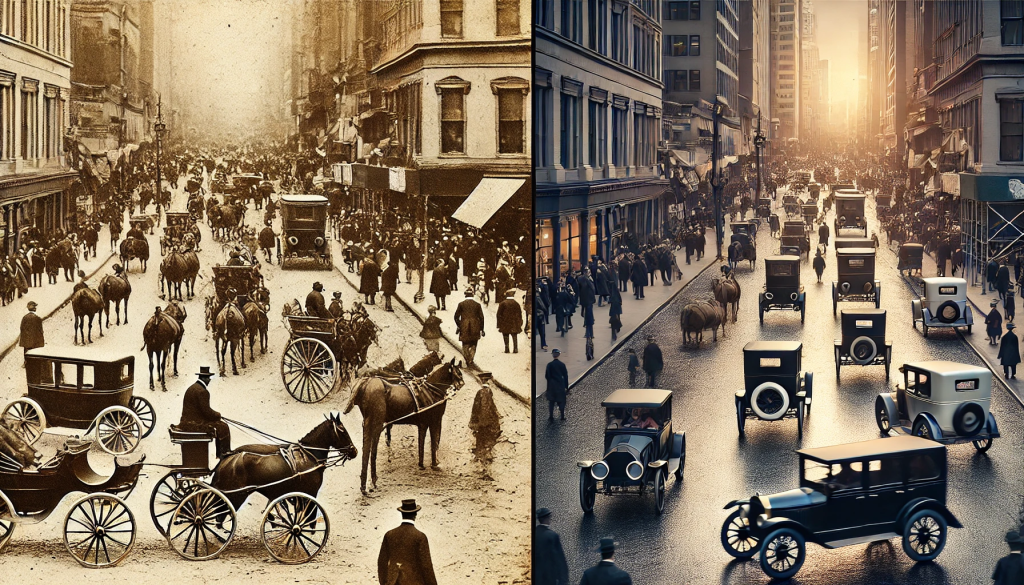
New York 1900 - 1913 (RethinkX)
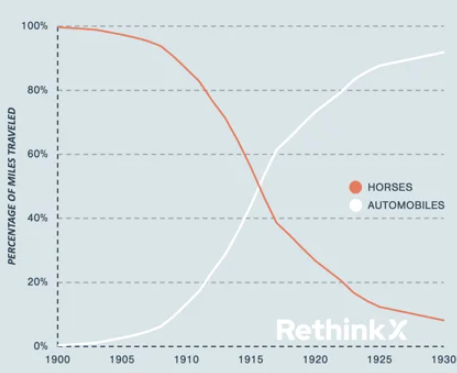
X Curve (RethinkX)
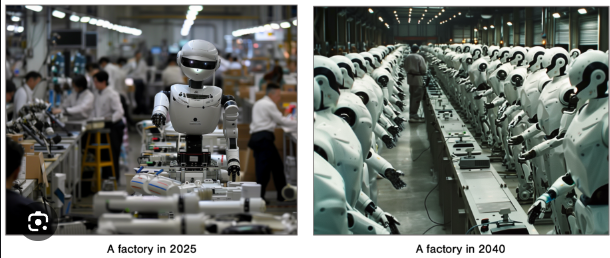
A Factory in 2025 v 2040 (RethinkX)

Summary of article "This time, we are the horses: the disruption of labor by humanoid robots," Tony Seba, Adam Dorr, and Bradd Libby of RethinkX argue that just as automobiles rapidly displaced horses in the early 20th century, humanoid robots, powered by a convergence of advanced technologies termed the "labor engine," are poised to disrupt human labor across the global economy within the next 15-20 years. This transformation, driven by sensors, AI, actuators, and batteries becoming cheaper and more powerful, will follow what RethinkX calls a "disruption X-curve"—a pattern where the adoption of new technology accelerates along an S-shaped growth curve while the old technology’s use collapses sharply, as seen historically with horses and cars. The X-curve illustrates how humanoid robots will reduce labor costs dramatically—potentially to under $0.10/hour by 2045—while increasing productivity, quality, and affordability of goods and services. The authors emphasize that this disruption will shift the focus from jobs to tasks, create a new labor system with near-zero marginal costs, and amplify other foundational disruptions in energy, transportation, and food. While offering immense opportunities for prosperity and problem-solving, this shift poses significant challenges, including inevitable technological unemployment, necessitating urgent societal planning and investment to protect people, not jobs or industries, and ensure a stable transition to a future of material superabundance.

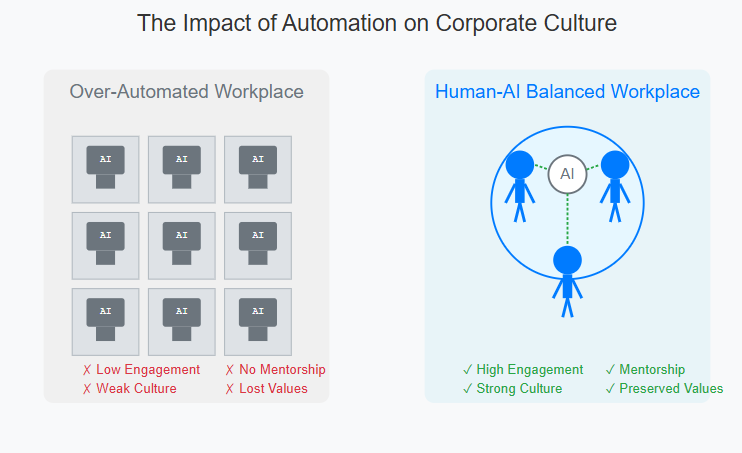
The impact of Automation on Culture

The Oversight in Seba’s Vision: The Crucial Human Element

Seba’s analogy assumes that human roles in business are purely functional—like horses used for transportation—rather than cultural and ethical. But businesses are not merely engines of efficiency; they are living ecosystems built on relationships, trust, and a shared sense of purpose.

Excessive automation without human oversight leads to a workplace devoid of interpersonal engagement, mentorship, and the ethical considerations that define responsible corporate behavior. Employees are not just cogs in an operational machine; they are the carriers of institutional knowledge, corporate values, and customer relationships. Stripping away human involvement in decision-making weakens the very structure that makes a company resilient and adaptable.

The Perils of a World Without Accountability

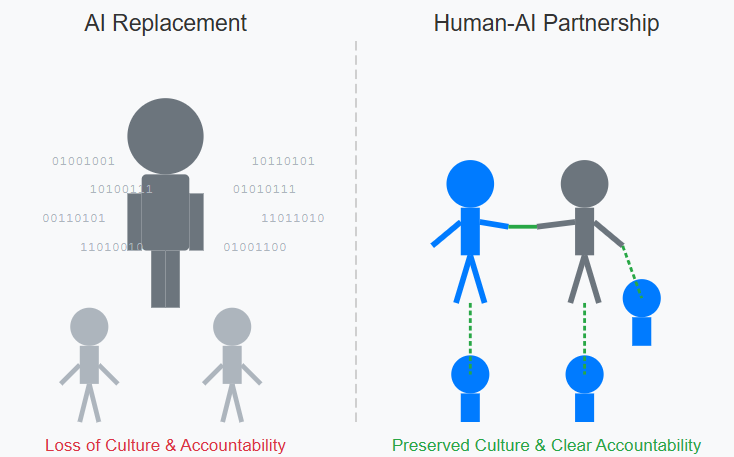
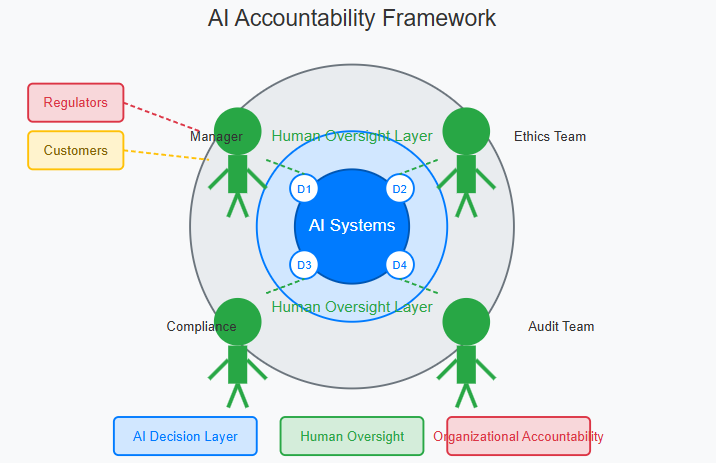
In Seba’s AI-dominated world, accountability becomes ambiguous. When AI systems make decisions independently, who is responsible when things go wrong? If a machine learning model denies a loan, mismanages a compliance issue, or mistreats a customer, businesses cannot simply blame the algorithm. Without human oversight, the chain of responsibility becomes blurred, and companies risk losing the accountability mechanisms that drive continuous improvement and ethical behavior.

High-performing organizations thrive on accountability. Leaders and employees take ownership of their actions, learn from mistakes, and drive positive change. If AI replaces too many human-driven roles, decision-making becomes opaque, and businesses may struggle to course-correct when errors occur, leading to regulatory, reputational, and ethical risks.

Culture Is More Than Just Output

Seba’s thesis also underestimates the role of company culture in sustaining long-term business success. A company’s identity is built on the collective experiences of its workforce—the relationships, shared goals, and mission that inspire employees to innovate and contribute meaningfully.

When AI automates not just repetitive tasks but also decision-making, creative problem-solving, and customer engagement, it strips away opportunities for employees to develop a sense of purpose and belonging. This can lead to widespread disengagement, higher turnover, and a transactional work environment that lacks the emotional and ethical depth needed for true long-term success.

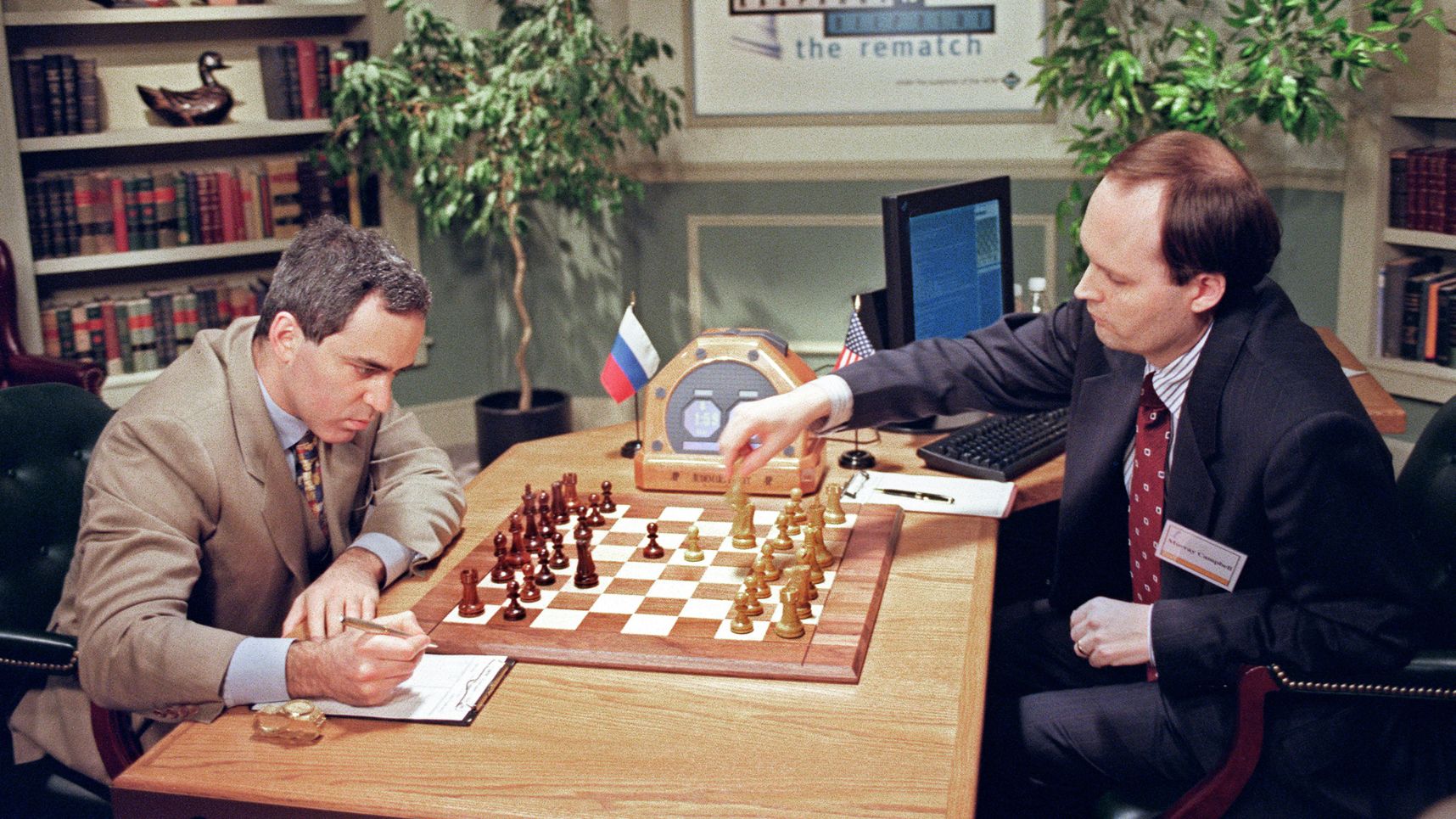
Kasparov v Deep Blue
Preserving Culture
AI Accountablity Framework
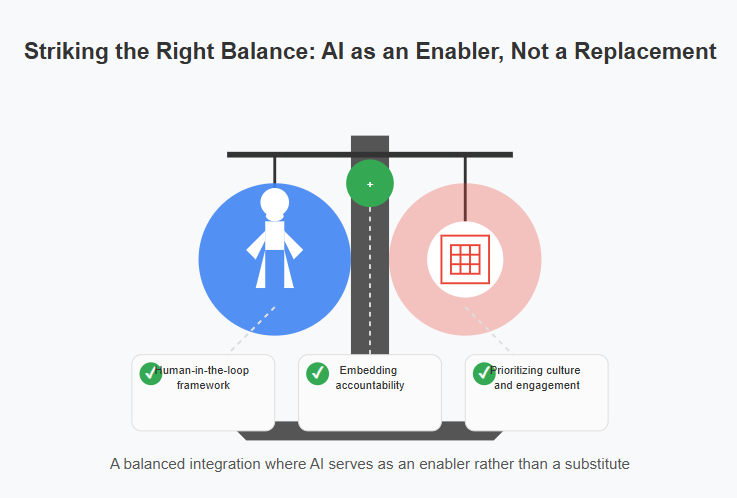
AI v Human Balance

Striking the Right Balance: AI as an Enabler, Not a Replacement

The right path is not a full-scale replacement of human roles, as Seba suggests, but a balanced integration where AI serves as an enabler rather than a substitute. Businesses should focus on leveraging AI to augment human capabilities while ensuring that critical processes remain under human stewardship.

A more sustainable approach includes:

✅ Maintaining a strong human-in-the-loop framework: AI should enhance decision-making, not completely remove human agency.

✅ Embedding accountability measures: Clear lines of responsibility must exist even when AI is involved in decision-making.

✅ Prioritizing corporate culture and engagement: Human interactions and mentorship must remain integral to the workplace.

The Future Is Human + AI, Not AI Alone

While Tony Seba’s We Are the Horses presents a compelling vision of automation’s potential, it overlooks the risks of eliminating human oversight from business processes. 

Companies that over-automate without considering the cultural and ethical implications may find themselves losing their core identity, disengaging their remaining workforce, and facing unforeseen accountability challenges. 

The most successful businesses of the future will not be those that eliminate human input but those that intelligently integrate AI while preserving the values, relationships, and accountability that drive sustainable success.


Lawrence Lynch, Managing Director, Metatron Consulting.

Insights from the Cloud AI Summit 2024


Get Ahead on AI insights with Cloud AI Summit


Human in the Loop Ideal

The human-in-the-loop ideal: ▶ AI should not replace human decision making, but only assist it. ▶ The combination human+AI is better than each on its own. ▶ Humans should always have the last word.
Olle Haggstrom
Professor Chalmers University of Technology

Need Expert Advice on AI?

Dont leave it too late to Act on AI

Scroll to Top